

Look around senescent cells
SASP is studied as an inflammatory signal pattern around senescent cells.

NK cells (Natural Killer cells) are studied as cells involved in the immune surveillance of abnormal cells and senescent cells (Senescent Cells) in the body. At Cellforce One, the process of taking NK cells drawn from your own blood, activating and culturing them, and returning them by intravenous infusion is reviewed against a target scale of 2–3 billion cells — including the culture process, activity, and quality documentation — with the physician deciding on an individual basis within the scope of a provision plan filed / notified under Japan's Act on the Safety of Regenerative Medicine (Category III, PC3250244). This is not a treatment recommended for everyone.
Filed / notified under Japan's Act on Safety of Regenerative Medicine — Category III plan PC3250244. Out-of-pocket / private treatment. Diagnosis, prescription, and treatment decisions are made through physician consultation.
Entry point: NK eligibility review (blood draw + physician assessment) / Category III PC3250244 · private treatment / fees presented individually in physician consultation / culture process, activity, and quality documentation confirmed / shared before your visit via LINE or email.
Whether NK is suitable is decided by a physician after reviewing your blood work, your medical history (especially any cancer-treatment history), and your goals. Even if you don't have every record ready, you can start a records consultation with what you can send.
You don't need every record in hand. You can start a records consultation with whatever you can send.
We organize your blood work, condition, and goals. Suitability is not decided from test values alone.
We organize your concerns and goals around immunity and aging. Testing does not confirm a diagnosis.
We organize where this sits relative to treatment you are receiving and your progress. When needed, consultation with a specialist or your attending physician comes first.
As a filed provision plan, the physician confirms whether NK could become an option to consider. It is not a treatment suited to everyone, and any cancer history is judged with particular care.
Based on the records, a physician organizes which options to consider; suitability is decided individually by a physician.
NK cell consultation should not be compared only by the treatment name or by a headline cell count. Even when the phrase "NK culture" is the same, stimulation design, culture duration, growth pattern, viability, activity-related checks, sterility-related checks, storage, and transport records can differ.
At Cellforce One Clinic Tokyo, autologous NK cells are reviewed through source traceability, culture records, a 2–3 billion-cell scale as one reference point, and the condition of cells before return. Cell processing is handled through a contracted cell-processing facility with quality-management discipline. These are review items for physician explanation, not promises of a treatment result.
The route described here uses the patient's own blood. Source, collection timing, and processing path are organized for review.
Growth pattern, viability, activity-related checks, sterility-related checks, storage, and transport records are treated as review items.
The physician reviews testing, medical history, current care, risks, and alternatives before any individual decision.
Category III regenerative-medicine provision plan PC3250244 / self-pay / private care. Filing under Japan's Act on Safety of Regenerative Medicine indicates the provider framework; it is not national treatment-effect endorsement and does not promise an individual outcome.
Rather than deciding from the treatment name alone, follow the sequence: quality records, body-state review, research background, physician explanation, and contact.
Review cell scale, growth pattern, viability, sterility-related checks, and records.
Read immune-surveillance, senescent-cell, and inflammation research as background.
See the order: records, physician review, explanation, consent, and follow-up.
Send what you want to ask through LINE, email, or WhatsApp.
NK cells are discussed in immune-surveillance research. This is used as background for physician explanation, not as a standalone treatment decision.
Research discusses senescent-cell biology, SASP, inflammation, and aging-related changes. Individual relevance must be reviewed medically.
If considered after screening, NK cell therapy is explained as an intravenous route within the filed provision framework. Individual results vary.
The following mechanisms are discussed in immune-surveillance research. They are not presented as proof of an individual effect.
Research discusses NKG2D ligands such as MICA/B and ULBP as immune-surveillance signals.
Activating receptor recognizing PVR / Nectin-2. Research suggests a complementary role to NKG2D in senescent cell recognition.
A natural cytotoxicity receptor (NCR). Cell and mouse research shows that NKp46 can recognize ecto-calreticulin on ER-stressed cells; this mechanistic finding is not evidence of treatment benefit in people.
Perforin forms pores in target-cell membranes, and granzyme B can enter and induce apoptosis. This is research-background language, not an individual clinical prediction.
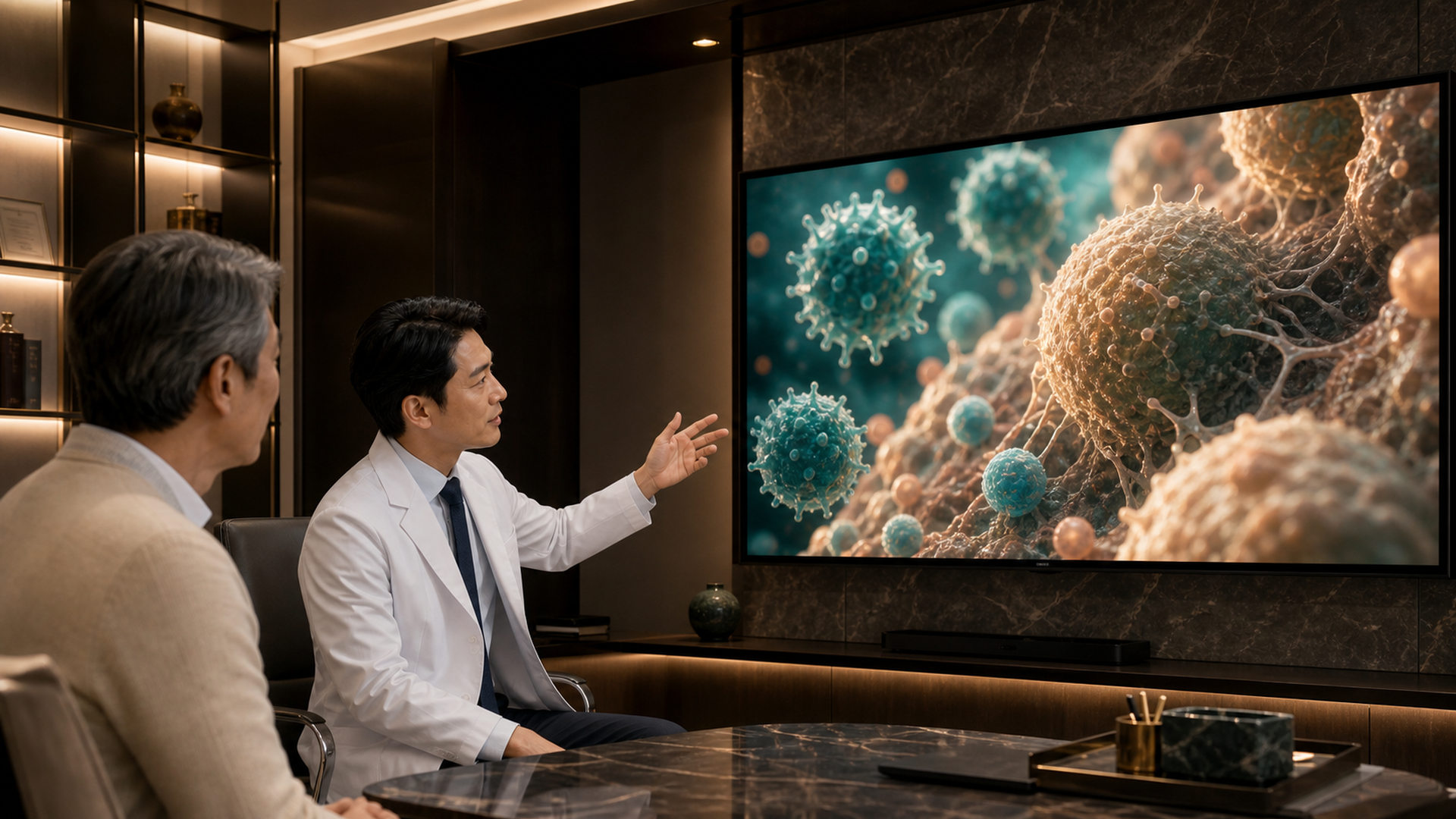
NK cells, senescent cells, receptors, and inflammatory signals are organized in patient-facing language so you can ask what matters in consultation.
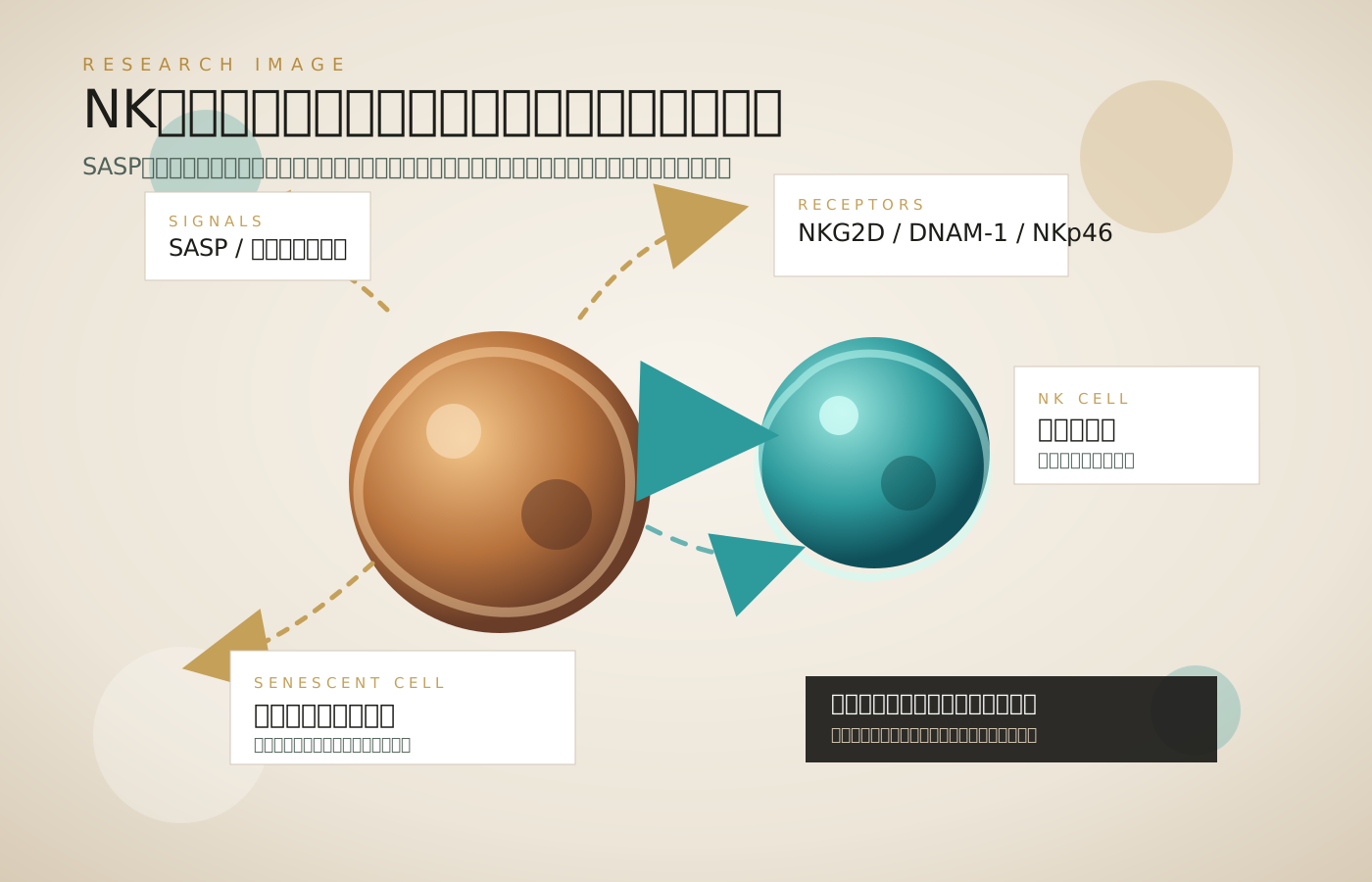
SASP is studied as an inflammatory signal pattern around senescent cells.
NK cells are studied through receptor pathways such as NKG2D, DNAM-1, and NKp46.
This is a research-background diagram, not proof of a patient's test result or treatment effect.
On smartphones, the diagram is simplified into larger text so patients can read the explanation without zooming.
This concept diagram shows the research background for inflammatory signals such as SASP and NK-cell recognition. It does not indicate an individual outcome.
The mechanisms above describe pathways suggested by basic research. Clinical relevance varies by individual; a specific outcome is not promised.
For autologous NK cells, the review is not limited to the final cell count. A 2–3 billion-cell scale can be one reference point, but the physician also reviews how cells were stimulated, how they expanded, and what condition they were in before return.
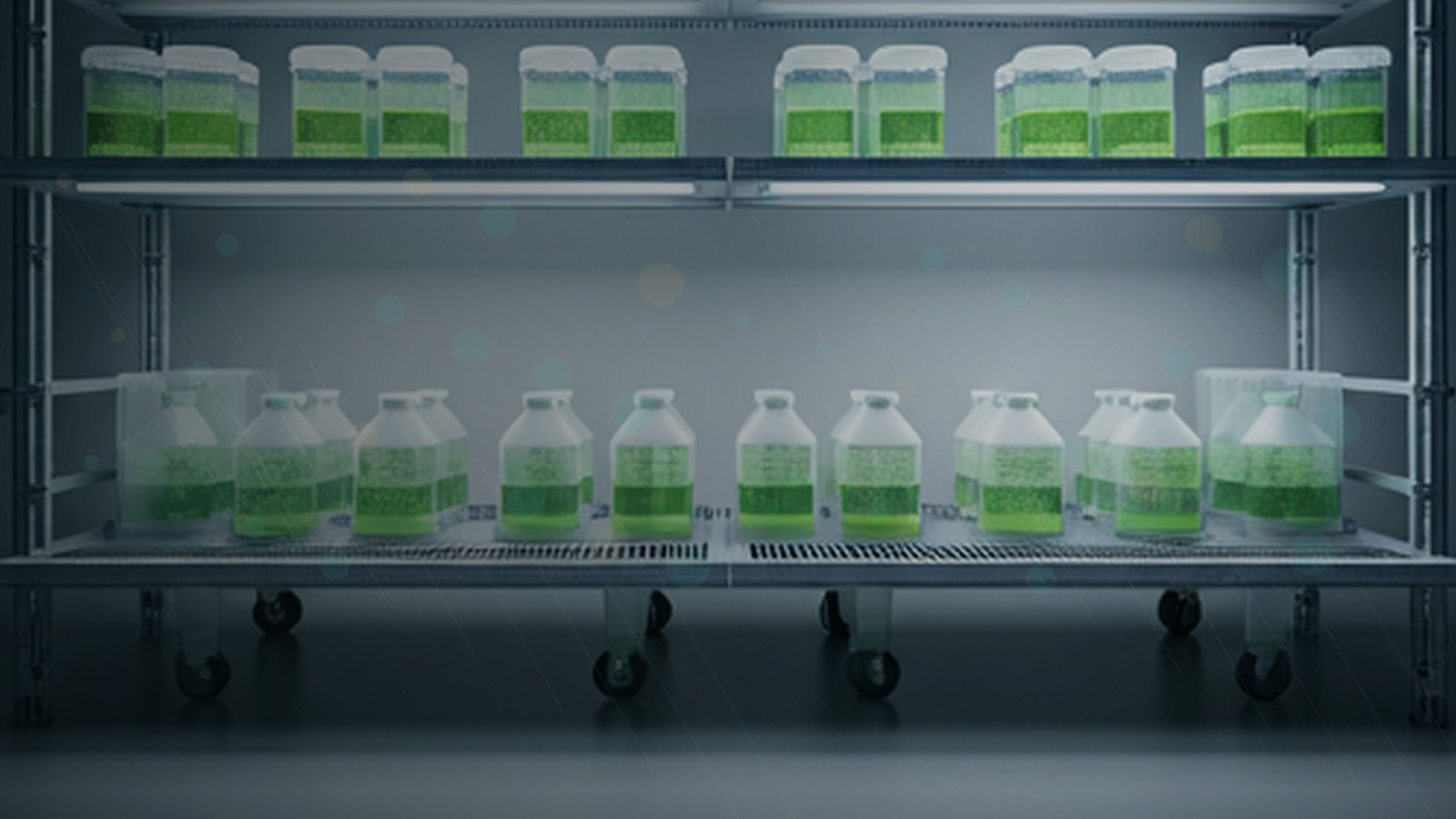
Growth during culture, cell condition before return, viability, sterility-related checks, and storage / transport records are organized as quality documents for physician explanation.
A headline cell count matters, but it is not the whole review. How the cells reached that scale, and whether their condition after culture can be reviewed, changes the questions to ask.
Cells are collected, stimulated outside the body, expanded, and checked before return. Final count, expansion ratio, growth pattern, viability, sterility-related checks, and storage / transport records are reviewed together.
The point is not only the name or price. The consultation should clarify how far cells expanded, what records remain, and what the physician can explain before a decision.
NK cell culture is not simply placing cells in a culture environment and waiting for them to increase. The physician may review stimulation design, culture duration, expansion method, final cell count, expansion ratio, viability, activity-related checks, sterility-related checks, and storage / transport records. If external laboratory or testing records are supplied, those items can also become material for physician explanation.
Activity-related checks and laboratory documents are quality-review materials describing cell condition. They are not proof of symptom change and do not promise a result.
The final cell count can be reviewed as a reference point, but it is not used alone.
How far cells expanded, and whether the growth pattern is explainable, is reviewed through culture records.
The condition of cells before return is treated as a quality-document review item.
Activity-related checks, where available, are used as physician-explanation material, not as outcome proof.
Cells including NK cells are collected from the patient's own blood.
In the culture environment, cells may be stimulated and prepared for expansion.
A 2–3 billion-cell scale may be reviewed together with expansion ratio and culture records.
Cell condition, sterility-related checks, and storage / transport records are reviewed before explanation.
The NK cells discussed here are derived from the patient's own blood. Source, collection timing, and processing path are clarified as part of the review.
Stimulation method, culture duration, growth toward a 2–3 billion-cell scale, and remaining records can differ. Culture method, expansion ratio, viability, activity-related records, and quality documents are reviewed item by item.
More cells alone is not the point. The physician reviews how cells expanded, what condition they were in before return, and whether quality records are available for explanation.
Filed / notified under Japan's Act on Safety of Regenerative Medicine as Category III, plan number PC3250244. Filing represents the provider framework; it is not national endorsement of treatment effect.
If you are interested in autologous NK cell therapy, the first step is to organize imaging, blood tests, medical history, medications, and standard-care context for physician review.
Blood tests, infectious-disease checks, inflammation context, general condition, and imaging when needed are organized first.
Medical history, medications, standard-care context, and key risks are reviewed before any individual explanation.
Whether there is a next medical discussion is handled separately from quality records, cost, major risks, and informed consent.
Six peer-reviewed papers covering NK-related immune surveillance and senescent-cell research. Citations are research background and do not promise individual outcomes.
Research discusses how activated NK cells recognize senescent-cell-related signals via NKG2D and DNAM-1 receptor pathways.
Read on Frontiers →Research suggests molecular mechanisms by which senescent cells evade NK-mediated immune surveillance with age, framing the rationale for reinforcing NK function.
Read on Nature Aging →Research suggests immune system aging is associated with accelerated aging across organ systems, framing immune function as a systemic health indicator.
Read on Nature →Cell and mouse experiments describe an NKp46–ecto-calreticulin recognition mechanism in ER-stressed cells. This is mechanistic research, not a human treatment-outcome study.
Read on Nature →Research suggests an association between NKG2D and DNAM-1 receptor expression on activated NK cells and senescent cell recognition performance.
Read on Frontiers →Research describes apoptosis induced by perforin and granzyme B released by NK cells as a mechanism of senescent cell elimination.
Read on Cell Death & Disease →Goals, history, cancer history, current care, and prior assessment results are shared in physician consultation. Suitability and alternatives are reviewed individually.
Approximately 30 mL of peripheral blood is collected and transported to the CPC the same day for PBMC isolation.
Cell-processing details, timing, quality documents, and route are explained individually when NK therapy is selected after physician review.
Activated NK cells are administered as an intravenous infusion (typically 60–90 minutes), followed by brief observation.
Biomarkers and self-reported indicators are reassessed 1–3 months post-infusion. Continued tracking is supported via Monthly Longevity Review.
Follow-up may include inflammation markers, biomarkers, self-reported indicators, and medical-record organization when the physician considers them useful.
The Monthly Longevity Review is a member program that organizes health data month by month, with periodic review by Japanese physicians. It can be introduced as a post-treatment follow-up option when appropriate.
It is a filed Category III regenerative-medicine option in which NK cells may be isolated from the patient's own blood, activated and expanded outside the body, and returned by intravenous infusion when appropriate after physician review. NK cells are studied as immune-surveillance cells related to abnormal cells and senescent-cell biology. Individual explanation depends on test results, history, risks, and the relationship to standard care.
A portmanteau of "senescent" + "therapy" — a research term used around senescent-cell biology and immune-surveillance strategies. Public information does not replace individual physician review.
For autologous NK cells, ask not only about cell count but also about culture method, approximate expansion toward a 2–3 billion-cell scale, expansion ratio, cell condition before return, viability, activity-related checks, sterility-related checks, storage, and transport records. These are quality-document review items for physician explanation and do not promise treatment results.
Follow-up timing and items differ by person. Some research discusses biomarker changes over one to three months, but subjective changes and degree vary. The physician explains how follow-up should be reviewed in each case.
Determined per individual through physician consultation. Options range from a single infusion to multi-session protocols based on goals, condition, and assessment results.
Transient reactions such as fever or fatigue may occur with infusion-based procedures, and other risks can differ by condition. The physician explains possible risks and alternatives before any treatment decision.
No. NK therapy is not a substitute for standard cancer care. Research discusses NK cells and the immune environment as background, but diagnosis and treatment decisions must follow the patient's standard-care context and physician judgment.
Yes. Pre-arrival consultation via WhatsApp or email, followed by blood draw → culture → infusion scheduled around your Japan visit. You may return home during the culture period and come back for infusion.
Biomarker follow-up such as NK activity and CRP can be reviewed after treatment when appropriate. For ongoing monitoring, we can introduce the Monthly Longevity Review as a follow-up option.
The NK provision plan is filed / notified as a Category III regenerative medicine provision plan (PC3250244) under Japan's Act on Safety of Regenerative Medicine. Filing represents the provider framework, not national treatment-effect endorsement.
NK cells are studied in relation to immune surveillance of abnormal and senescent cells, while MSC and EV topics are discussed through different biological mechanisms and quality-document questions. Whether any combination is considered depends on test results, medical history, current standard care, risks, alternatives, and physician judgment.
Costs, major risks, number of sessions, and schedule are explained individually in consultation as self-pay / private care. Organizing your questions by email, LINE, WhatsApp, or the inquiry form before the visit can make the consultation smoother. The page does not promise a uniform price or schedule because conditions differ by person.
A physician consultation reviews your current health status, records, screening needs, risks, costs, and whether NK-related consultation is appropriate.
Domestic patients prefer LINE; international patients typically use WhatsApp.
These links point to Japan's public registry pages for filed regenerative-medicine provision plans and to the clinic's official YouTube / Instagram channels. Registry publication is a reference for filed provision-plan information; it is not evidence of individual treatment outcomes or absence of risk.