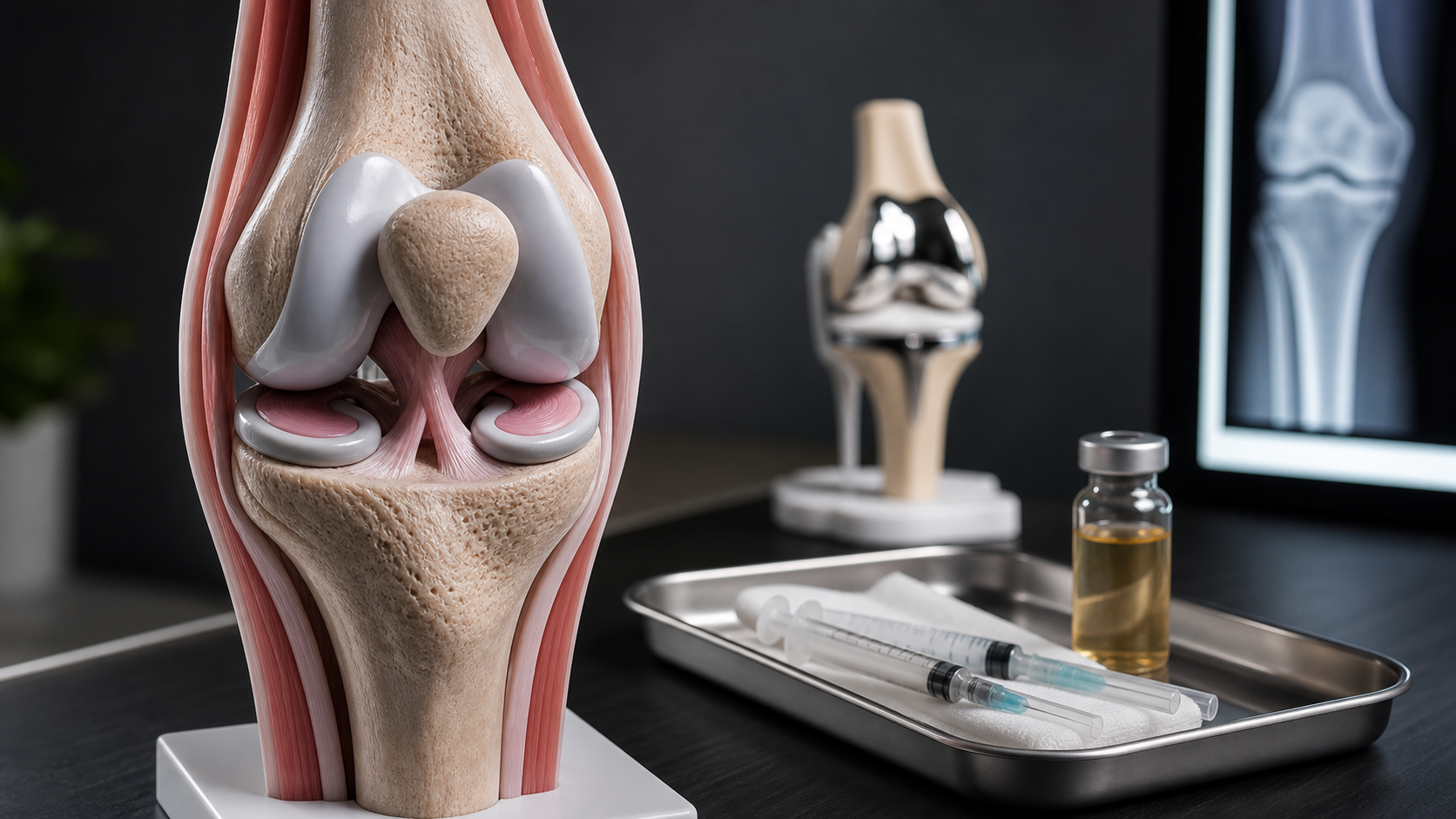

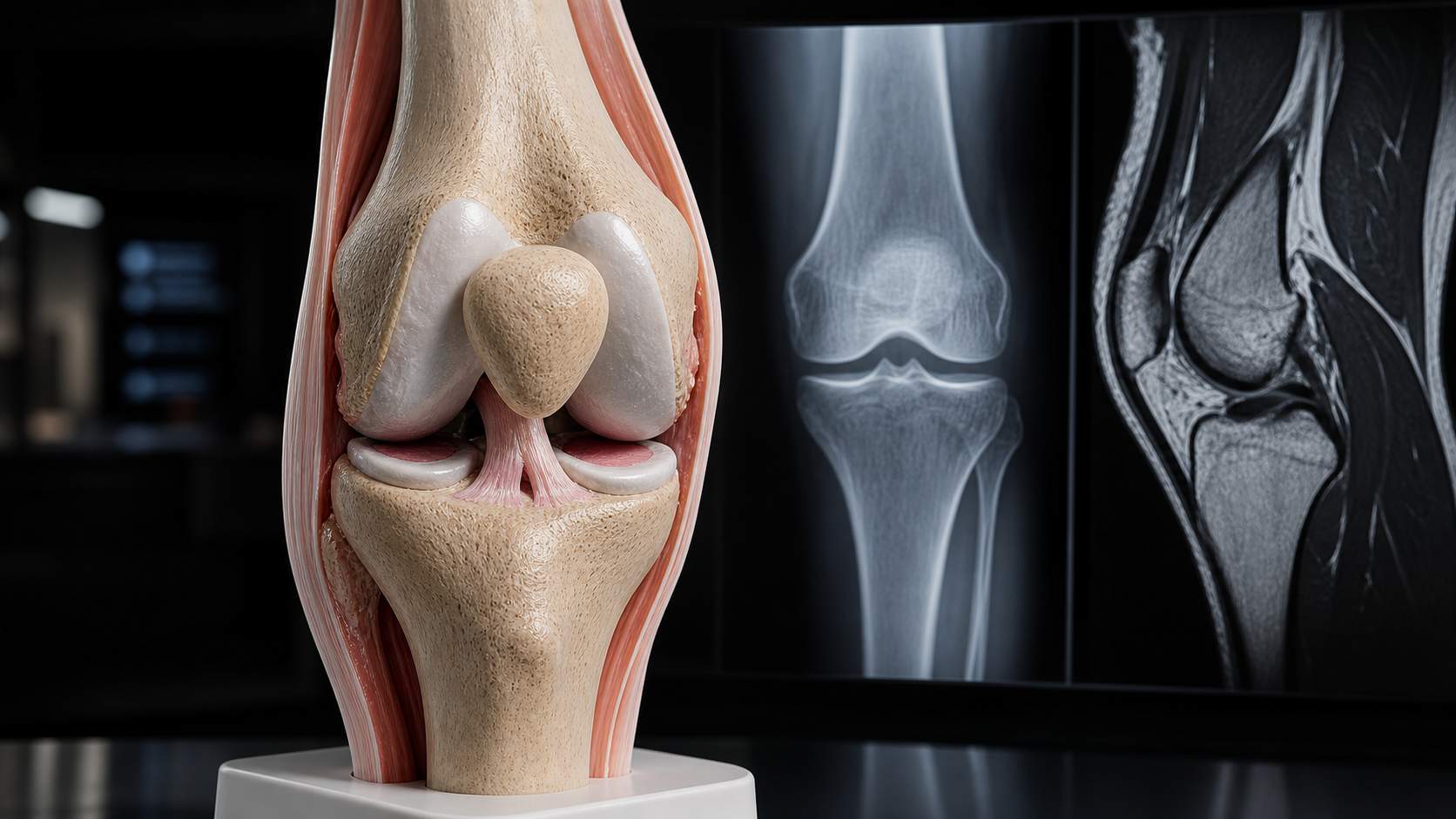
Knee Anatomy / Motion Review

Organize knee pain by meniscus, cartilage, bone, synovium, muscles, and movement.

Stairs, first steps, twisting, squatting. This page helps turn what you felt in the video into a structured consultation note before a physician review.

MeniscusKnee osteoarthritisMRI / X-rayPhysician review
Structure First

Pain is not decided by imaging alone or by symptoms alone.

The knee combines the meniscus, cartilage, subchondral bone, synovium, ligaments, patellofemoral joint, muscle strength, and gait. We organize four common patterns so the next medical question is clearer.

This page provides general educational information for consultation preparation. Diagnosis, treatment direction, and eligibility for any procedure are decided individually by a physician after examination and document review.

What to prepare before consultation
Priority 4

Four high-priority patterns to organize

The order of review changes by painful motion, catching, swelling, imaging findings, age, and activity level.

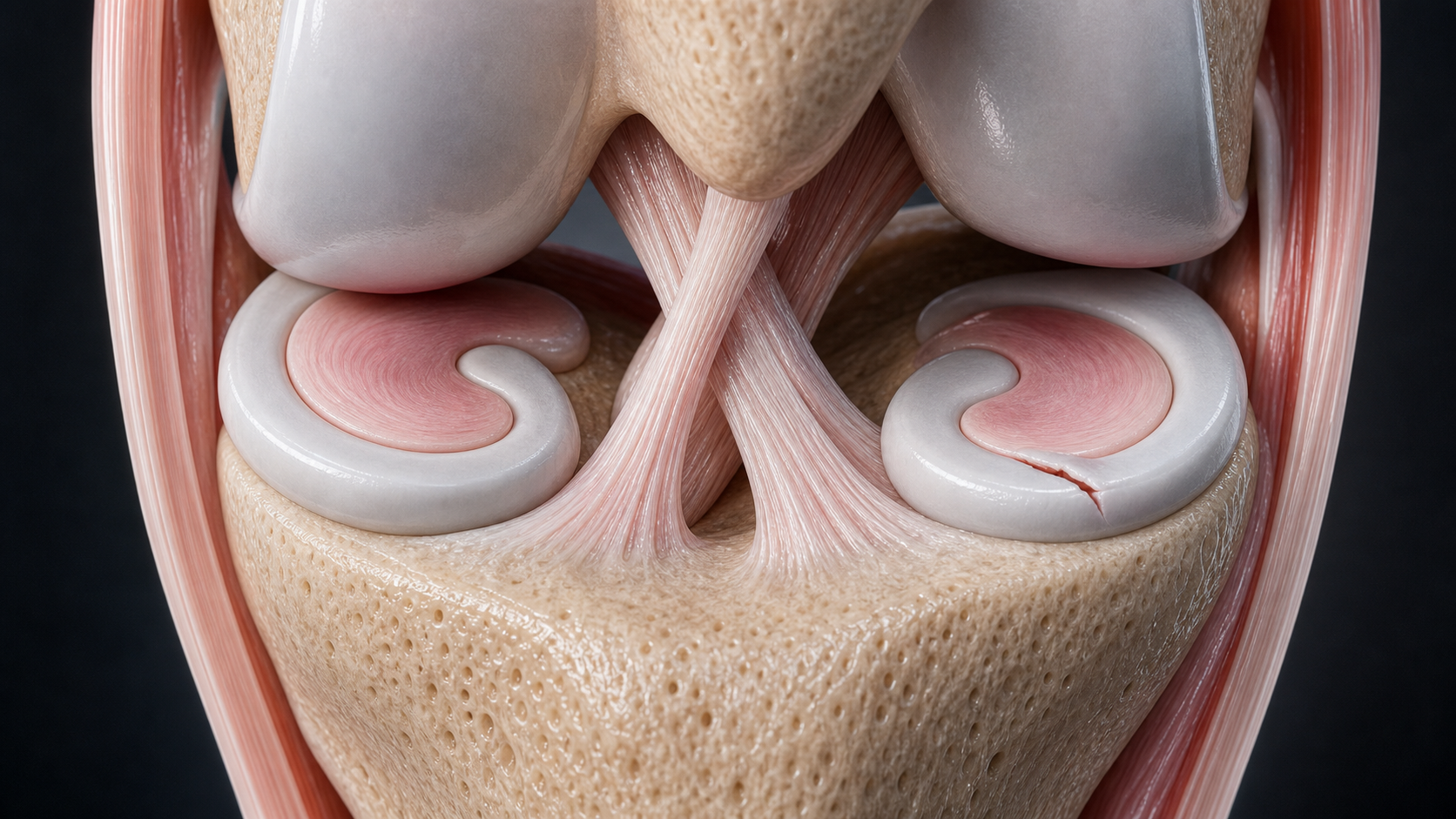
Realistic knee image showing a meniscus tear concept
01

Meniscus injury

Pain or catching with twisting, squatting, or changing direction.

The meniscus helps distribute load between the femur and tibia. The outer red zone has more blood supply; the inner area has less, so natural repair can be limited depending on tear location.

A physician reviews MRI, painful angles, locking, swelling, sports or work demands, and then maps options such as rehabilitation, injections, and arthroscopic procedures when appropriate.
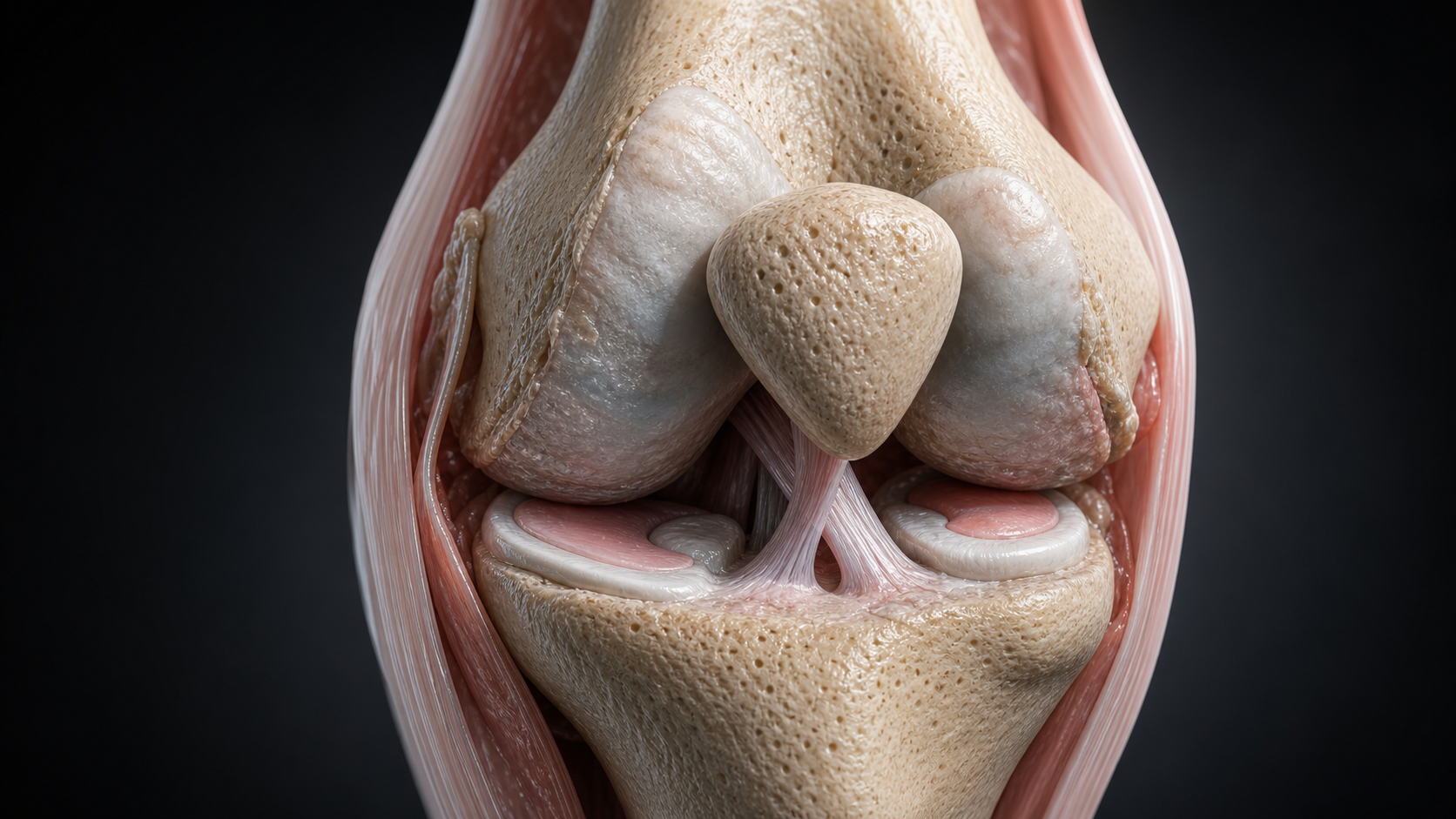
Realistic image of whole-joint knee osteoarthritis changes
02

Knee osteoarthritis

Pain on stairs, standing up, first steps, or after longer walking.

Osteoarthritis is not only cartilage thinning. Meniscus extrusion, subchondral-bone reaction, bone spurs, synovitis, leg alignment, muscle strength, and gait may all matter.

X-ray, MRI, range of motion, leg axis, gait, and pain location are used to map rehabilitation, lifestyle adjustment, medication, injections, pain procedures, PRP or regenerative-medicine consultation, and surgical options.

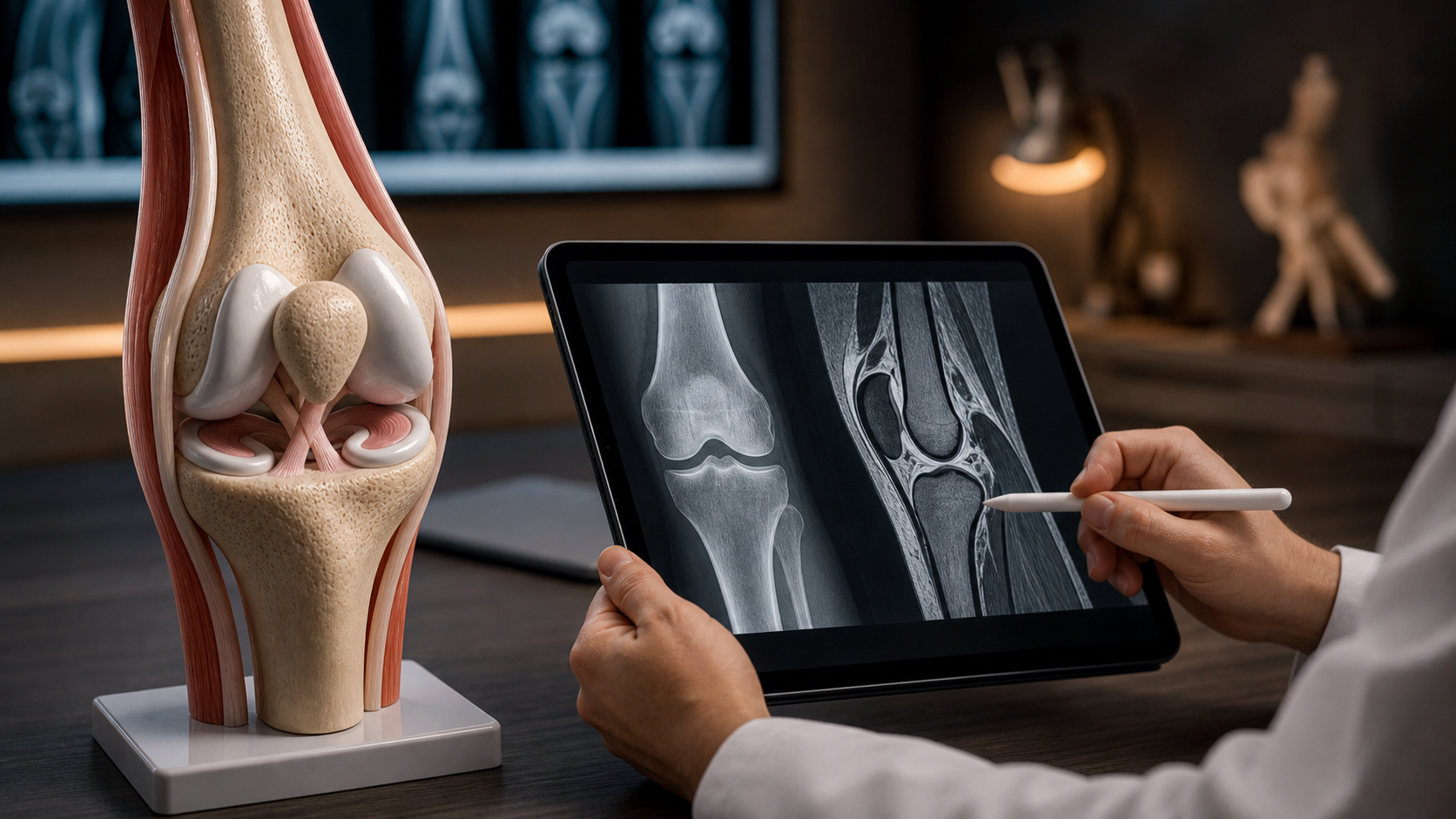
Knee imaging review scene
03

Ligament, synovium, and bone reaction

Instability, swelling, warmth, sudden pain, or pain when loading.

Ligament injury, synovitis, increased joint fluid, bone bruise, or subchondral stress can create sharp pain during movement. Location and swelling pattern become clues.

Timing of injury, swelling pattern, MRI or X-ray, inflammation background, medication, and history guide physician review of bracing, rehabilitation, injections, pain procedures, or further testing.

Physician explaining knee findings to a patient
04

Patellofemoral joint and alignment

Front-knee pain with downhill stairs, standing up, or after sitting.

The kneecap track, thigh and hip support, foot mechanics, bow-leg or knock-knee alignment, and gait habits can increase pain. The movement chain matters.

Posture, walking pattern, strength, range of motion, and imaging are reviewed before planning rehabilitation, braces, activity modification, injections, or referral.

Pain Mechanism

Why pain can appear during that motion

Load concentrates in one area

Cartilage thickness, meniscus support, leg alignment, and muscle control can make joint pressure rise during stairs or standing.

A structure catches or pinches

A torn meniscus edge or inflamed tissue can be caught during motion, causing sharp pain or a locking sensation.

Inflammation and fluid increase

Synovitis or joint fluid can make the knee feel tight, especially near the end of bending or straightening.

The bone layer below cartilage reacts

Subchondral-bone reaction or bone bruise is organized together with imaging and load-related pain.

Treatment Map

Treatment options are mapped in order.

The goal is not to force one route. Conservative care, injections, pain procedures, regenerative-medicine consultation, and surgery are organized after examination and physician review.

  • Exercise therapy, strength, gait, and daily-motion adjustment
  • Medication, hyaluronic-acid injections, and pain or inflammation procedures
  • PRP or regenerative-medicine consultation, with eligibility reviewed after examination
  • Arthroscopy, osteotomy, or knee replacement when surgical options need review
Treatment options are mapped in order.
Before Consultation

What to prepare before consultation

  • X-ray, MRI, referral letters, and prior diagnosis names
  • Painful motion, pain location, swelling, catching, and night pain
  • Prior medication, injections, procedures, and rehabilitation
  • Short walking or stair videos if available

Use this as a consultation note