
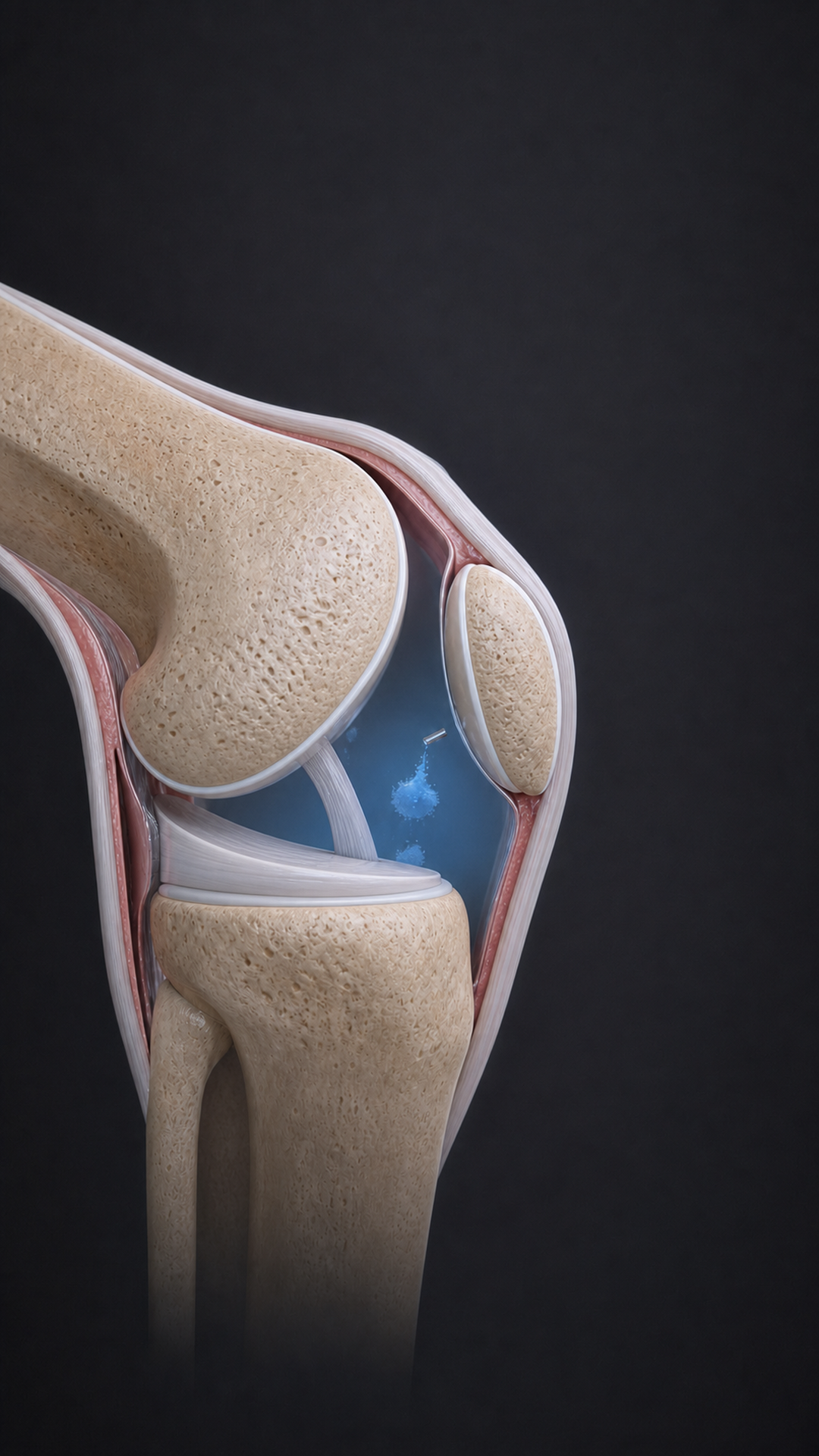
Knee osteoarthritis and joint injections
When bone shape has changed,
what can an injection change?
Before considering the role of an injection, separate structural findings from inflammation.
Concept CGI
01 / 06
The first point to understand
A joint injection does not return osteophytes or bone shape to their previous state.
A joint injection is not an explanation for returning altered bone to its previous shape. Purpose, supporting evidence, and duration differ by injection type and should be considered separately from structural assessment.
 Concept CGI
02 / 06
STRUCTURE ≠ INFLAMMATION
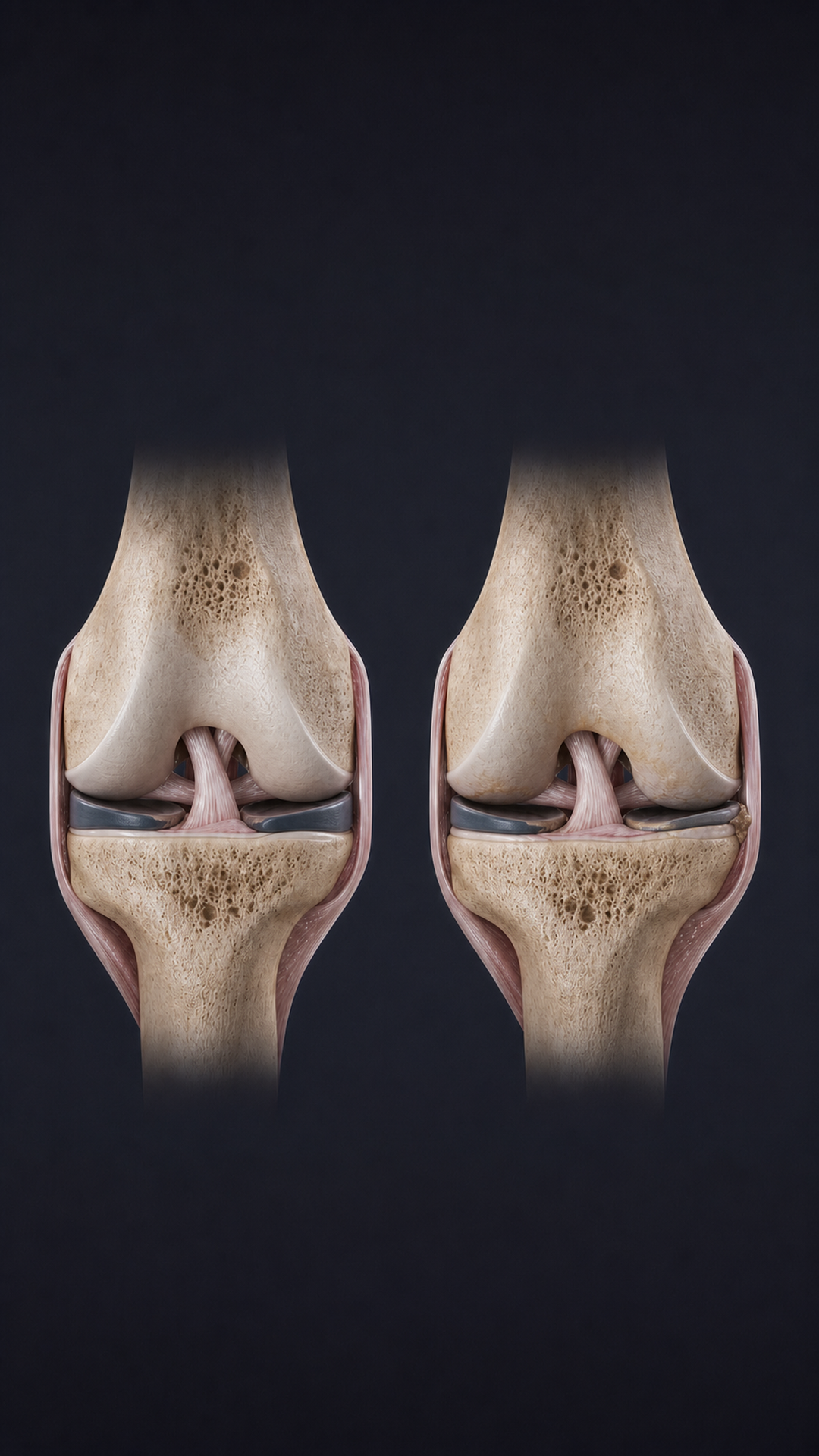
Changes in shape and inflammatory responses are different dimensions.
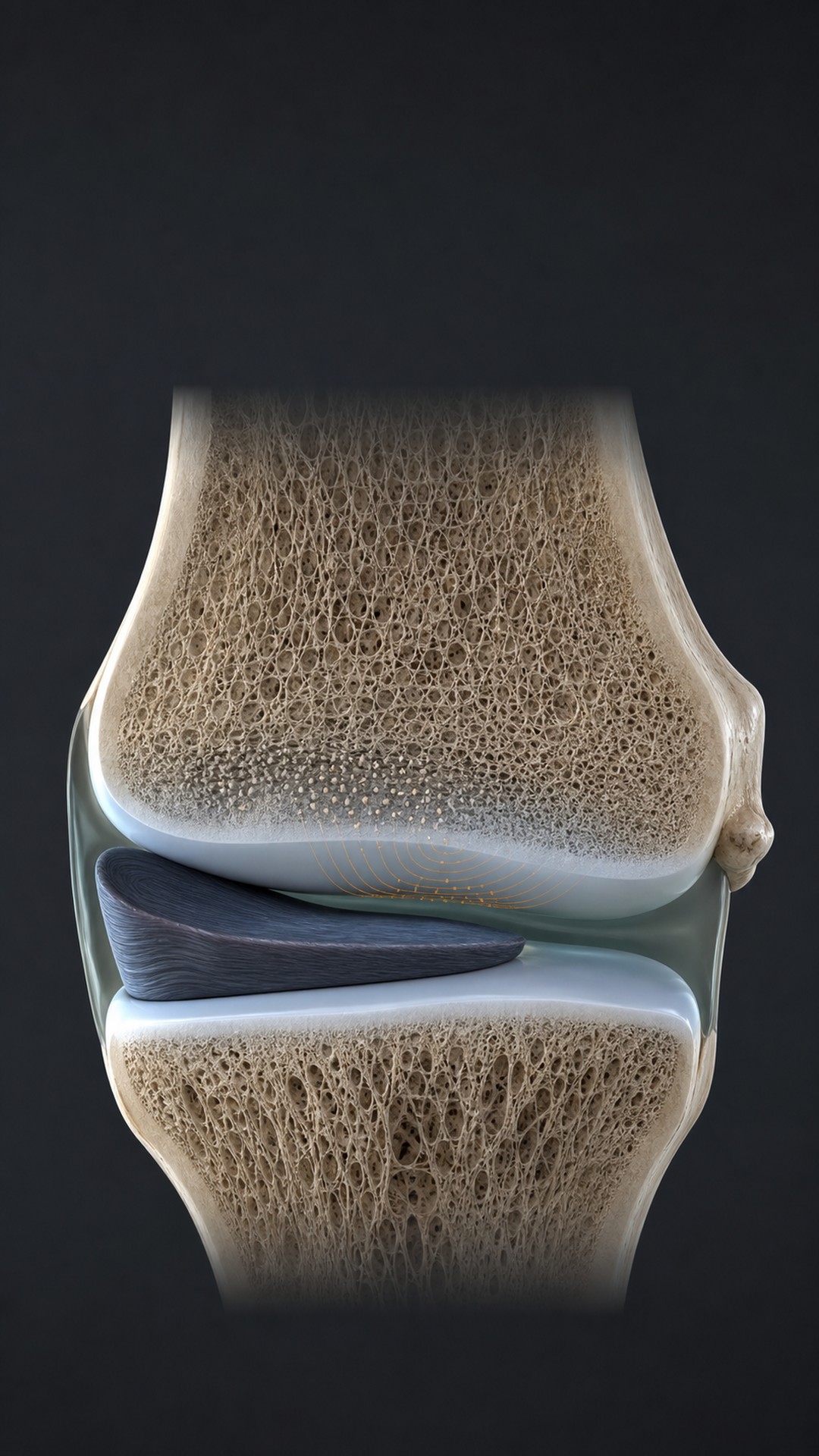
Knee osteoarthritis is not only about bone. Changes in cartilage and the meniscus, uneven loading, and remodeling of the bone beneath the cartilage are related findings. The bone may appear denser, and osteophytes may be present.
- Structure
- The shape and position of the whole joint, including bone, cartilage, the meniscus, and leg alignment.
- Inflammation
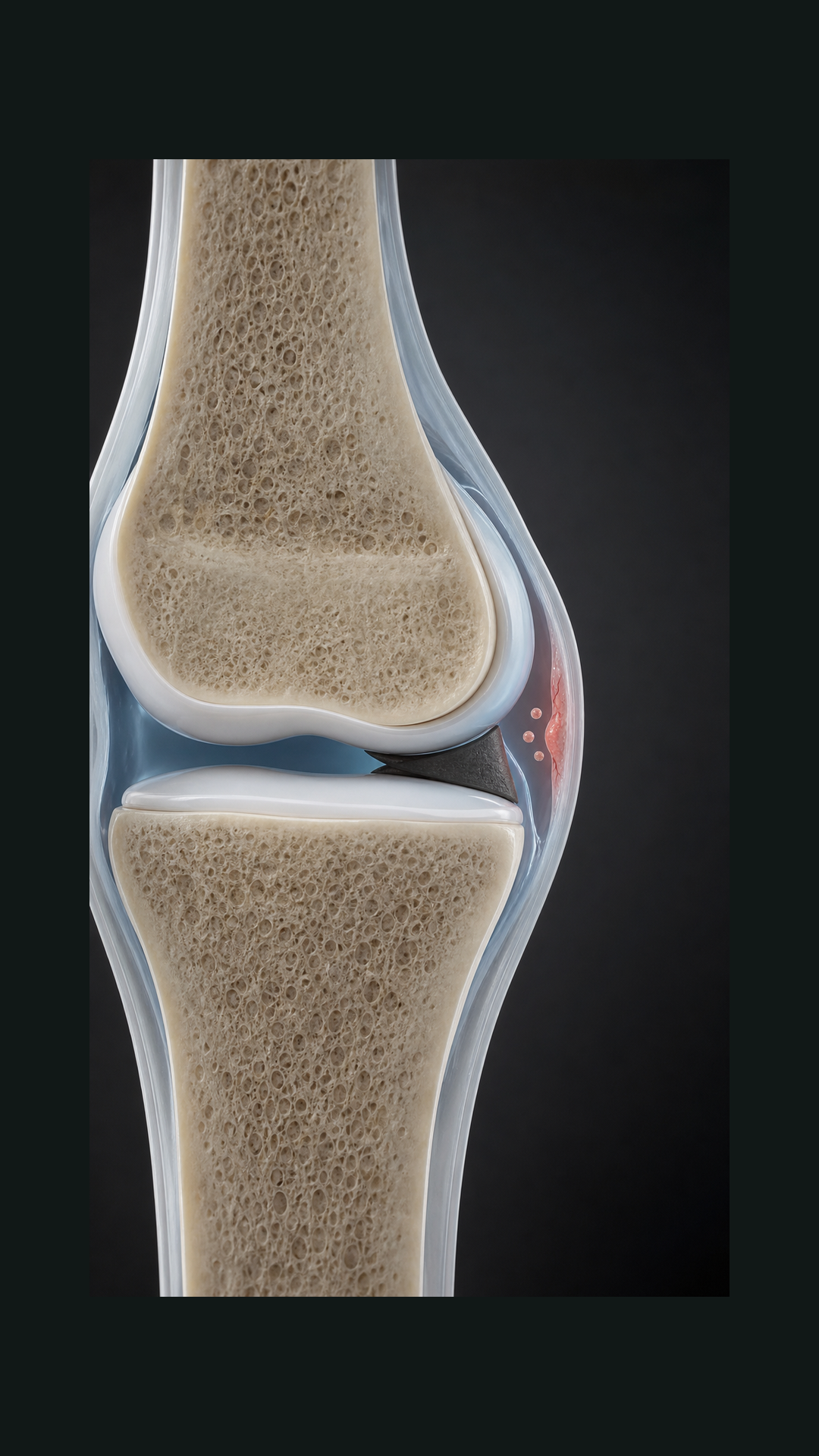
- Responses in tissues such as the synovium, which may be related to swelling and pain.
- Symptoms
- Pain with certain movements, swelling, or difficulty moving. Imaging alone does not determine symptoms.
03 / 06
Where inflammation may be involved
A response in the synovium may be related to swelling and pain.
Knee pain is not always caused by inflammation. Even when people use the same term, knee pain, structural findings, loading, inflammation, and movement should be reviewed together.
04 / 06
Separate purpose from evidence
Do not group everything under the single word injection.
Purpose and supporting evidence should be reviewed separately for each injection type. This page alone cannot determine suitability, frequency, dose, or duration for a specific treatment.
 Imaging concept
05 / 06
ASSESSMENT PATHWAY
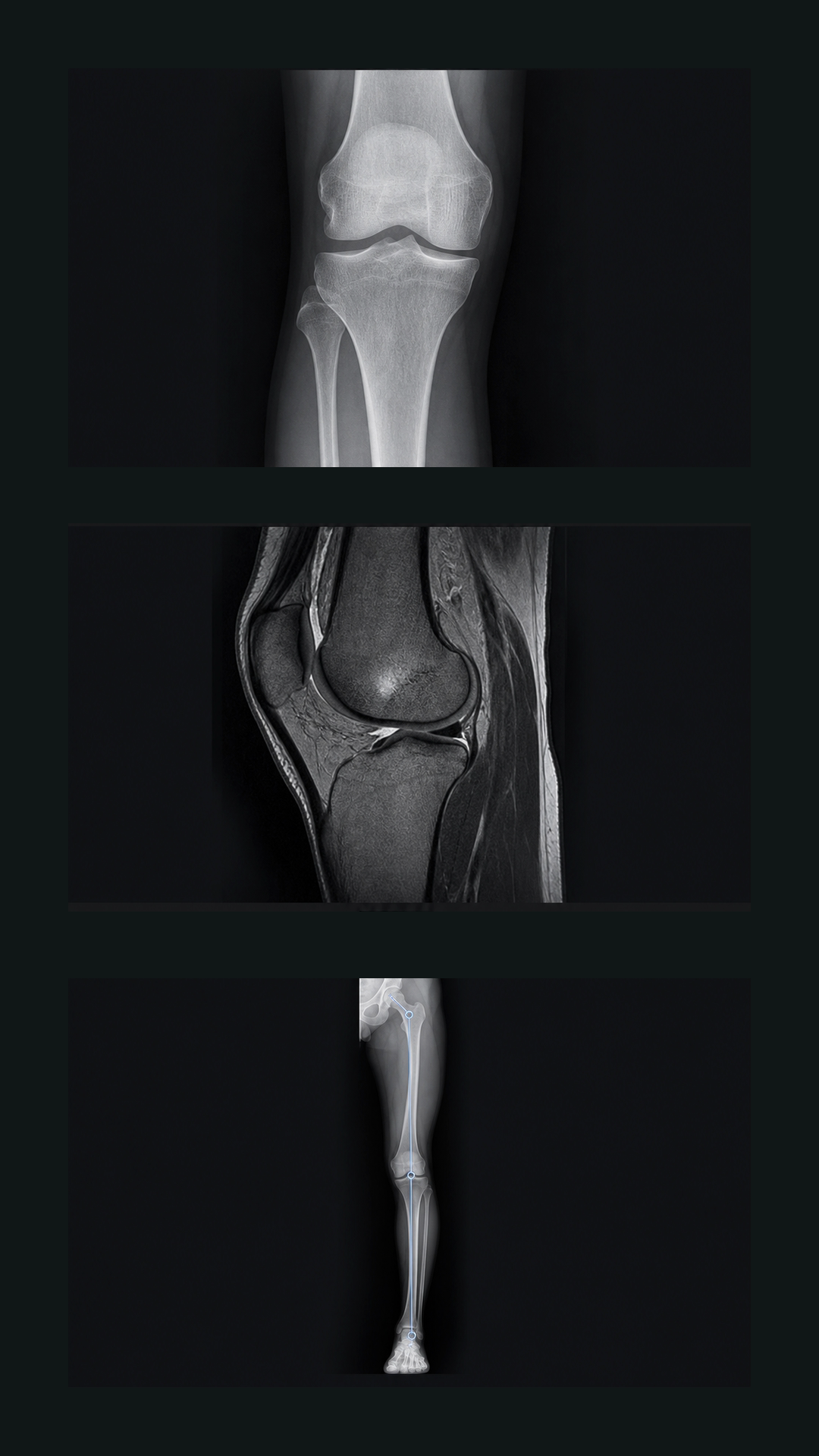
Before asking what to change, separate what may be happening.
- 1Symptoms and movement
Review when and where symptoms occur, and which movements are difficult.
- 2Clinical examination and X-rays
Review joint shape, joint space, osteophytes, and other findings.
- 3MRI when needed
Look more closely at findings such as the meniscus or bone marrow lesions.
- 4Leg alignment and loading
Assess standing alignment and how load may be distributed.
06 / 06
Notes before a consultation
Organize these four points about your knee.
This is not a self-check for diagnosis. It is a way to prepare information to discuss with a physician.
NEXT STEP
To review the information about your knee, DM us KNEE.
This page does not send a DM, make a booking, or submit an enquiry. Please send the keyword from the DM screen of the social platform where you saw this content.